Solid-State Quantum Systems (Group Huebl)
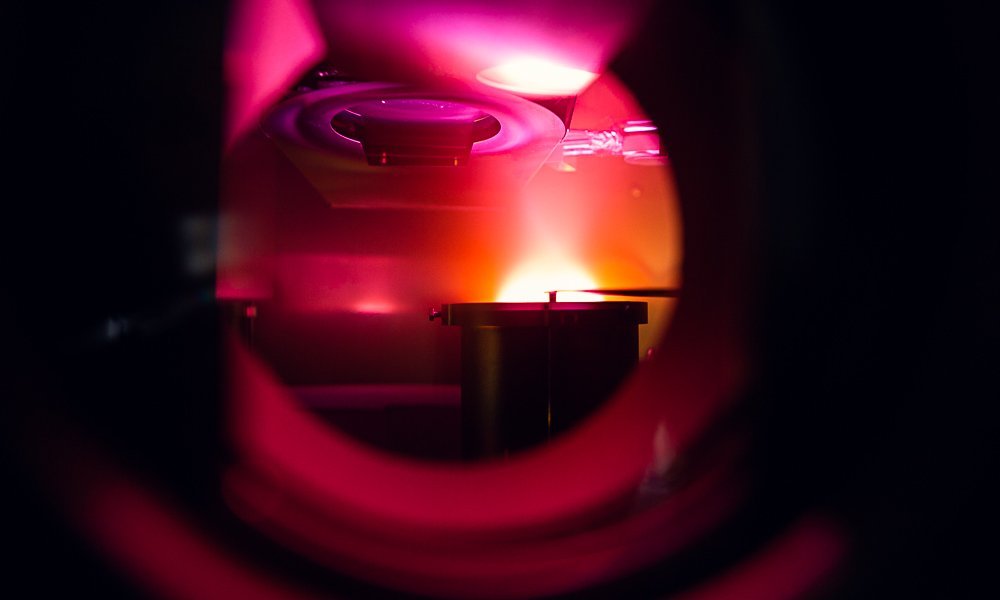
We study the fundamental physics of solid-state based quantum systems and advance their fabrication technology to lay the basis for applications in quantum computing, quantum communication, and quantum sensing.
ICON project
Recent projects
Rudolf Gross, Stefan Filipp, Frank Deppe, Hans Huebl, Matthias Althammer, Qi-Ming Chen, Frank Deppe, Kirill Fedorov, Florian Fesquet, Kedar Honasoge, Achim Marx, Yuki Nojiri, Michael Renger, Nadezhda Kukharchyk, Stephan Geprägs, Thomas Luschmann, Ana Strinic
Rudolf Gross, Frank Deppe, Stefan Filipp, Rudolf Gross, Hans Huebl, Nadezhda Kukharchyk
Rudolf Gross, Stefan Filipp
Stefan Filipp, Daniil Bazulin, Niklas Bruckmoser, Noelia Fernandez, Stefan Filipp, Niklas Glaser, Franz Haslbeck, Gerhard Huber, Martin Knudsen, Leon Koch, Gleb Krylov, Klaus Liegener, Achim Marx, Hans Huebl, Rudolf Gross, Lea Richard, Joao Henrique Romeiro Alves, Federico Roy, Johannes Schirk, Christian Schneider, Christian Schweizer, Malay Singh, Ivan Tsitsilin, Florian Wallner, Florian Wallner, Max Werninghaus
ICON publication
Recent publications
Joachim Hofer, Rudolf Gross, Gerard Higgins, Hans Huebl, Oliver F. Kieler, Reinhold Kleiner, Dieter Koelle, Philip Schmidt, Joshua A. Slater, Michael Trupke, Kevin Uhl, Thomas Weimann, Witlef Wieczorek, Markus Aspelmeyer
Research Article | Physical Review Letters 131, 043603  (2023)
Preprint: arXiv:2211.06289
Janine Gückelhorn, Sebastián de-la-Peña, Matthias Grammer, Monika Scheufele, Matthias Opel, Stephan Geprägs, Juan Carlos Cuevas, Rudolf Gross, Hans Huebl, Akashdeep Kamra, Matthias Althammer
Research Article | Physical Review Letters 130, 216703  (2023)
Preprint: arXiv:2209.09040
Rasmus Flaschmann, Christian Schmid, Lucio Zugliani, Stefan Strohauer, Fabian Wietschorke, Stefanie Grotowski, Björn Jonas, Manuel Müller, Matthias Althammer, Rudolf Gross, Jonathan J. Finley, Kai Müller
Research Article | Materials for Quantum Technology 3, 035002  (2023)
Thomas Luschmann, Philip Schmidt, Frank Deppe, Achim Marx, Alvaro Sanchez, Rudolf Gross, Hans Huebl
Research Article | Scientific Reports 12, 1608  (2022)
Preprint: arXiv:2104.10577
Qi-Ming Chen, Florian Fesquet, Kedar E. Honasoge, Fabian Kronowetter, Yuki Nojiri, Michael Renger, Kirill G. Fedorov, Achim Marx, Frank Deppe, Rudolf Gross
Research Article | Physical Review A 105, 012405  (2022)
Preprint: arXiv:2107.01842

Today we are witnessing a scientific and technological revolution, which has been enabled by the realization and manipulation of engineered quantum systems and their use in quantum information processing, communication and sensing. This development has led to the novel research field of Quantum Science and Technology (QST), which advances the understanding of fundamental principles of quantum systems and explores their practical applications.

Quantum systems based on engineered solid-state systems and circuits have attracted enormous interest because they provide one of the most promising hardware platforms for quantum computers, quantum communication systems, and applications in quantum sensing. We study the fundamental properties of various solid-state systems based on superconducting circuits, spin systems, nano-mechanical systems as well as hybrid systems thereof. We also use them for the realization of quantum bits and circuits. Key topics addressed by our research are decoherence mechanisms, the realization of strong and ultra-strong coupling between quantized solid-state excitations and microwave photons (e.g. magnon-photon, magnon-phonon, phonon-photon coupling), as well as the optimization of the manipulation, control and readout of solid-state quantum bits. Highlights of our research have been the first demonstration of ultra-strong coupling in superconducting circuit QED, the first demonstration of strong magnon-photon coupling, or the observation of echo trains in pulsed electron spin resonance of a strongly coupled spin ensemble.

For key quantum technology platforms (e.g. superconducting circuits, NV centers, quantum dots), microwaves intrinsically allow for zero frequency conversion loss, since they are the natural frequency scale. Therefore, our research aims at developing novel components, experimental techniques, and theory models building on the quantum properties of continuous-variable propagating microwaves. Our long-term visions include distributed quantum computing & communication via microwave quantum local area networks (QLANs) as well as sensing applications based on the illumination of an object with quantum microwaves (quantum radar). To this end, we already developed the dual path method for state tomography of propagating quantum microwaves and demonstrated path entanglement, one- and two-mode squeezing, the displacement operation or the implementation of the remote state preparation protocol.

Subtopics
Superconducting Quantum Circuits
In superconducting circuits, the superconducting condensate can be described by a quantum mechanical wave function with a single amplitude and phase. As a consequence, superconducting circuits can be engineered in a way to behave as macroscopic artificial atoms or quantum harmonic oscillators. For this reasons, they are called superconducting quantum circuits.

We study the foundations and applications of superconducting quantum circuits. The latter include the astonishing demonstration of textbook quantum mechanics as well as quantum information processing (QIP) and quantum simulation. Our research does not only address the foundations of quantum information systems and superconducting quantum technology, but also key fundamental questions regarding quantum coherence, quantum dynamics, and decoherence mechanisms in solid state quantum systems. Furthermore, it requires extremely sensitive measurements at millikelvin temperatures.

ICON project
Recent projects
Rudolf Gross, Stefan Filipp, Frank Deppe, Hans Huebl, Matthias Althammer, Qi-Ming Chen, Frank Deppe, Kirill Fedorov, Florian Fesquet, Kedar Honasoge, Achim Marx, Yuki Nojiri, Michael Renger, Nadezhda Kukharchyk, Stephan Geprägs, Thomas Luschmann, Ana Strinic
Rudolf Gross, Stefan Filipp
Stefan Filipp, Daniil Bazulin, Niklas Bruckmoser, Noelia Fernandez, Stefan Filipp, Niklas Glaser, Franz Haslbeck, Gerhard Huber, Martin Knudsen, Leon Koch, Gleb Krylov, Klaus Liegener, Achim Marx, Hans Huebl, Rudolf Gross, Lea Richard, Joao Henrique Romeiro Alves, Federico Roy, Johannes Schirk, Christian Schneider, Christian Schweizer, Malay Singh, Ivan Tsitsilin, Florian Wallner, Florian Wallner, Max Werninghaus
ICON publication
Recent publications
Rasmus Flaschmann, Christian Schmid, Lucio Zugliani, Stefan Strohauer, Fabian Wietschorke, Stefanie Grotowski, Björn Jonas, Manuel Müller, Matthias Althammer, Rudolf Gross, Jonathan J. Finley, Kai Müller
Research Article | Materials for Quantum Technology 3, 035002  (2023)
Qi-Ming Chen, Florian Fesquet, Kedar E. Honasoge, Fabian Kronowetter, Yuki Nojiri, Michael Renger, Kirill G. Fedorov, Achim Marx, Frank Deppe, Rudolf Gross
Research Article | Physical Review A 105, 012405  (2022)
Preprint: arXiv:2107.01842
M. Renger, S. Pogorzalek, Q. Chen, Y. Nojiri, K. Inomata, Y. Nakamura, M. Partanen, A. Marx, R. Gross, F. Deppe, K. G. Fedorov
Research Article | npj Quantum Information 7, 160  (2021)
Preprint: arXiv:2011.00914
Nano-Electromechanics
The field of nano-electromechanics explores the interaction of excitations in an electrical circuit with a displacement of a nano-mechanical object. The resulting sensing concept allows to investigate quantum mechanical phenomena in the literal sense, while interaction itself can be harnessed to synthesize quantum states in the electrical and mechanical entity. We realize nano-electromechanical systems in the form of nano-strings coupled to superconducting quantum circuits. The displacement of the nano-string controls the resonance frequency of the superconducting microwave circuit, realizing this interaction. While this coupling concept is vastly utilized in sensing applications ranging from simple force sensors to gravitational wave detectors, the nature of the coupling also allows for controlling and preparing mechanical oscillation states down to the quantum regime.

At the Walther-Meissner-Institute, we explore two coupling stategies for the realisation of the nano-electromechanical interaction:

  1. a capacitive coupling scheme, where the displacement of the nano-string resonator changes the overall capacitance of the superconducting electronic circuit, and
  2. an inductive coupling scheme, where we utilize the tunable inductance of a superconducting interference device to realize this purpose.

With these integrated nano-electromechanical devices, we have demonstrated force sensitivities down to aN/sqrt(Hz) and coupling rates in the tens of kHz range. We utilize these platforms to investigate and understand the interaction itself, study the mechanical properties of the materials involved and realize literal quantum mechanical states.

ICON project
Recent projects
Rudolf Gross, Stefan Filipp, Frank Deppe, Hans Huebl, Matthias Althammer, Qi-Ming Chen, Frank Deppe, Kirill Fedorov, Florian Fesquet, Kedar Honasoge, Achim Marx, Yuki Nojiri, Michael Renger, Nadezhda Kukharchyk, Stephan Geprägs, Thomas Luschmann, Ana Strinic
ICON publication
Recent publications
Joachim Hofer, Rudolf Gross, Gerard Higgins, Hans Huebl, Oliver F. Kieler, Reinhold Kleiner, Dieter Koelle, Philip Schmidt, Joshua A. Slater, Michael Trupke, Kevin Uhl, Thomas Weimann, Witlef Wieczorek, Markus Aspelmeyer
Research Article | Physical Review Letters 131, 043603  (2023)
Preprint: arXiv:2211.06289
Thomas Luschmann, Philip Schmidt, Frank Deppe, Achim Marx, Alvaro Sanchez, Rudolf Gross, Hans Huebl
Research Article | Scientific Reports 12, 1608  (2022)
Preprint: arXiv:2104.10577
Philip Schmidt, Mohammad T. Amawi, Stefan Pogorzalek, Frank Deppe, Achim Marx, Rudolf Gross, Hans Huebl
Research Article | Communications Physics 3, 233  (2020)
Preprint: arXiv:1912.08731
Quantum Communication and Sensing
We study the foundations of quantum microwave communication and sensing. We also develop quantum microwave technologies for the realization of quantum local area networks and advanced sensing methods.

We exploit the unique quantum properties of microwaves to develop exciting application scenarios such as quantum radar-type sensing, secure information transfer, and gate teleportation between distant superconducting qubits. We have pioneered this research field and are one of the leading groups worldwide. In a long-term perspective, we envision local area networks of superconducting quantum computers and a full-fledged quantum internet.

Microwaves in the frequency range of 1-10 GHz are the natural frequency scale of many well-known applications such as radar, mobile communication, or classical information processing. Consequently, microwaves are also promising candidates for modern quantum technology applications. The latter include quantum radar, networked superconducting quantum computing, and free-space quantum communication on a range also relevant for 5G. One of the key advantages of quantum microwaves compared to other frequency regimes is the fundamental technology match between the circuits used to generate, manipulate, and detect quantum microwaves and those used by several big IT companies and young start-ups for superconducting quantum information processing. In particular, our microwave approach removed one major roadblock on the path to high-fidelity gates between remote quantum circuits, namely the inefficient and demanding frequency conversion from microwave to optics and back.

Our research focuses on the continuous-variable regime, which offers advantages in terms of robustness and technological implementation. Since today’s road to quantum information processing is typically based on a digital approach, we put special emphasis on investigating hybrid approaches between discrete-variable and continuous-variable circuits and signals.

ICON project
Recent projects
Rudolf Gross, Stefan Filipp, Frank Deppe, Hans Huebl, Matthias Althammer, Qi-Ming Chen, Frank Deppe, Kirill Fedorov, Florian Fesquet, Kedar Honasoge, Achim Marx, Yuki Nojiri, Michael Renger, Nadezhda Kukharchyk, Stephan Geprägs, Thomas Luschmann, Ana Strinic
Rudolf Gross, Frank Deppe, Stefan Filipp, Rudolf Gross, Hans Huebl, Nadezhda Kukharchyk
Rudolf Gross, Stefan Filipp
ICON publication
Recent publications
Joachim Hofer, Rudolf Gross, Gerard Higgins, Hans Huebl, Oliver F. Kieler, Reinhold Kleiner, Dieter Koelle, Philip Schmidt, Joshua A. Slater, Michael Trupke, Kevin Uhl, Thomas Weimann, Witlef Wieczorek, Markus Aspelmeyer
Research Article | Physical Review Letters 131, 043603  (2023)
Preprint: arXiv:2211.06289
Rasmus Flaschmann, Christian Schmid, Lucio Zugliani, Stefan Strohauer, Fabian Wietschorke, Stefanie Grotowski, Björn Jonas, Manuel Müller, Matthias Althammer, Rudolf Gross, Jonathan J. Finley, Kai Müller
Research Article | Materials for Quantum Technology 3, 035002  (2023)
Qi-Ming Chen, Florian Fesquet, Kedar E. Honasoge, Fabian Kronowetter, Yuki Nojiri, Michael Renger, Kirill G. Fedorov, Achim Marx, Frank Deppe, Rudolf Gross
Research Article | Physical Review A 105, 012405  (2022)
Preprint: arXiv:2107.01842
Microwave Quantum Networks
Microwave quantum networks are expected to play an important role for interlinking different quantum technology platforms operating in the microwave regime. We study the foundations of microwave-based quantum networks and develop the key technologies required for their realization.

Microwave quantum networks are one technological cornerstone of many quantum microwave applications. For superconducting circuit architectures and quantum microwaves, such networks must currently operate at millikelvin temperatures. Since superconducting quantum information processors come with a proper cryostat, a so-called dilution refrigerator, anyways, care has to be taken only with respect to the proper design of a connection between such cryostats. At WMI, we have set up such a point-to-point connection [link Installation video] between two dilution refrigerators as a testbed for quantum communication and cryptography protocols. Equipped with low-loss superconducting transmission line cables, our installation can be viewed as a quantum local area network (Q-LAN) cable [link installation video] . The transmission losses of few dB/km are comparable to those in standard optical fibers. Through this Q-LAN cable, we plan to run microwave quantum communication and cryptography protocols. Furthermore, we aim to investigate the expected tolerance of our Q-LAN cable to higher temperatures experimentally. In a long-term perspective, we envision a quantum local area network with high connectivity between multiple nodes.

ICON project
Recent projects
Rudolf Gross, Stefan Filipp, Frank Deppe, Hans Huebl, Matthias Althammer, Qi-Ming Chen, Frank Deppe, Kirill Fedorov, Florian Fesquet, Kedar Honasoge, Achim Marx, Yuki Nojiri, Michael Renger, Nadezhda Kukharchyk, Stephan Geprägs, Thomas Luschmann, Ana Strinic
ICON publication
Recent publications
K. G. Fedorov, M. Renger, S. Pogorzalek, R. Di Candia, Q. Chen, Y. Nojiri, K. Inomata, Y. Nakamura, M. Partanen, A. Marx, R. Gross, F. Deppe
Research Article | Science Advances 7, eabk0891  (2021)
Preprint: arXiv:2103.04155
S. Pogorzalek, K. G. Fedorov, M. Xu, A. Parra-Rodriguez, M. Sanz, M. Fischer, E. Xie, K. Inomata, Y. Nakamura, E. Solano, A. Marx, F. Deppe, R. Gross
Research Article | Nature Communications 10, 2604  (2019)
J. Goetz, S. Pogorzalek, F. Deppe, K. G. Fedorov, P. Eder, M. Fischer, F. Wulschner, E. Xie, A. Marx, R. Gross
Research Article | Physical Review Letters 118, 103602  (2017)
Microwave Quantum Communication
We aim at developing novel components, experimental techniques, and the theoretical foundations of microwave quantum communication based on the quantum properties of continuous-variable propagating microwaves.

Our long-term vision is to develop distributed quantum computing & communication based on microwave quantum local area networks (QLANs). Microwaves are the natural frequency regime of several quantum computing platforms (superconducting circuits, NV centers, quantum dots). Therefore, microwaves are the natural frequency range for quantum communication between such platforms. In particular, no frequency conversion is required which usually is inefficient and related to significant losses. Moreover, microwaves can be distributed via superconducting cables with surprisingly small losses, eventually allowing for quantum communication and cryptography applications.

An important near-term goal is the demonstration of a QLAN via quantum teleportation and to develop a roadmap to real-life applications for the second/third phase of the European Quantum Technology Flagship. An important enabling technology for achieving the goal is the development of a microwave QLAN cable connecting the millikevin stages of two dilution refrigerators. This technology is developed by WMI together with its industrial partner Oxford Instruments within the European Quantum Technology Flagship project QMiCS.  The resulting “enabling” commercial products are beneficial for quantum technologies at microwave frequencies in general.

ICON project
Recent projects
Rudolf Gross, Stefan Filipp, Frank Deppe, Hans Huebl, Matthias Althammer, Qi-Ming Chen, Frank Deppe, Kirill Fedorov, Florian Fesquet, Kedar Honasoge, Achim Marx, Yuki Nojiri, Michael Renger, Nadezhda Kukharchyk, Stephan Geprägs, Thomas Luschmann, Ana Strinic
ICON publication
Recent publications
M. Renger, S. Pogorzalek, Q. Chen, Y. Nojiri, K. Inomata, Y. Nakamura, M. Partanen, A. Marx, R. Gross, F. Deppe, K. G. Fedorov
Research Article | npj Quantum Information 7, 160  (2021)
Preprint: arXiv:2011.00914
K. G. Fedorov, M. Renger, S. Pogorzalek, R. Di Candia, Q. Chen, Y. Nojiri, K. Inomata, Y. Nakamura, M. Partanen, A. Marx, R. Gross, F. Deppe
Research Article | Science Advances 7, eabk0891  (2021)
Preprint: arXiv:2103.04155
S. Pogorzalek, K. G. Fedorov, M. Xu, A. Parra-Rodriguez, M. Sanz, M. Fischer, E. Xie, K. Inomata, Y. Nakamura, E. Solano, A. Marx, F. Deppe, R. Gross
Research Article | Nature Communications 10, 2604  (2019)
Quantum Sensing with Propagating Microwaves
We study sensing strategies based on the quantum properties of propagating microwave signals.

Quantum microwaves promise a fundamentally increased sensitivity over classical sensing protocols. As in most sensing applications, the quantum advantage is typically restricted to the low-energy regime with signal energies on the order of a single photon.

ICON project
Recent projects
Rudolf Gross, Stefan Filipp, Frank Deppe, Hans Huebl, Matthias Althammer, Qi-Ming Chen, Frank Deppe, Kirill Fedorov, Florian Fesquet, Kedar Honasoge, Achim Marx, Yuki Nojiri, Michael Renger, Nadezhda Kukharchyk, Stephan Geprägs, Thomas Luschmann, Ana Strinic
ICON publication
Recent publications
M. Renger, S. Pogorzalek, Q. Chen, Y. Nojiri, K. Inomata, Y. Nakamura, M. Partanen, A. Marx, R. Gross, F. Deppe, K. G. Fedorov
Research Article | npj Quantum Information 7, 160  (2021)
Preprint: arXiv:2011.00914
Kirill G. Fedorov, L. Zhong, S. Pogorzalek, P. Eder, M. Fischer, J. Goetz, E. Xie, F. Wulschner, K. Inomata, T. Yamamoto, Y. Nakamura, R. Di Candia, U. Las Heras, M. Sanz, E. Solano, E. P. Menzel, F. Deppe, A. Marx, R. Gross
Research Article | Physical Review Letters 117, 020502  (2016)
L. Zhong, E. P. Menzel, R. Di Candia, P. Eder, M. Ihmig, A. Baust, M. Haeberlein, E. Hoffmann, K. Inomata, T. Yamamoto, Y. Nakamura, E. Solano, F. Deppe, A. Marx, R. Gross
Research Article | New. J. Phys. 15, 125013  (2013)
Microwave Quantum Cryptography
We study the foundations of quantum key distribution and cryptography in the microwave domain by exploiting superconducting quantum circuits.

The secure transmission of classical information is of tremendous importance in our society, e.g., when exchanging information on finances, health, or private issues. However, the advent of quantum computing poses a serious threat to classical encryption methods. One possible solution is the use of quantum cryptography methods, either based on actual or virtual entanglement between the communicating parties. Once a Q-LAN between quantum computers is realized, the exploration of such protocols is a natural task. Among various cryptography protocols, quantum key distribution (QKD) has the most obvious application potential. Ideally, QKD exploits quantum resources for the intrinsically secure exchange of a classical key for encoding a classical message (text, music, video etc.) between partners. At WMI, we use and extend the well-established toolkit of quantum microwave technology to implement QKD schemes. Potential advantages of microwaves are high secret key rates due to large absolute bandwidths and the potential for short-distance free-space implementations. The latter promise compatibility with the existing classical microwave infrastructure and ranges comparable to that of current 5G.

ICON project
Recent projects
Rudolf Gross, Stefan Filipp, Frank Deppe, Hans Huebl, Matthias Althammer, Qi-Ming Chen, Frank Deppe, Kirill Fedorov, Florian Fesquet, Kedar Honasoge, Achim Marx, Yuki Nojiri, Michael Renger, Nadezhda Kukharchyk, Stephan Geprägs, Thomas Luschmann, Ana Strinic
ICON publication
Recent publications
K. G. Fedorov, M. Renger, S. Pogorzalek, R. Di Candia, Q. Chen, Y. Nojiri, K. Inomata, Y. Nakamura, M. Partanen, A. Marx, R. Gross, F. Deppe
Research Article | Science Advances 7, eabk0891  (2021)
Preprint: arXiv:2103.04155
S. Pogorzalek, K. G. Fedorov, M. Xu, A. Parra-Rodriguez, M. Sanz, M. Fischer, E. Xie, K. Inomata, Y. Nakamura, E. Solano, A. Marx, F. Deppe, R. Gross
Research Article | Nature Communications 10, 2604  (2019)
Kirill G. Fedorov, L. Zhong, S. Pogorzalek, P. Eder, M. Fischer, J. Goetz, E. Xie, F. Wulschner, K. Inomata, T. Yamamoto, Y. Nakamura, R. Di Candia, U. Las Heras, M. Sanz, E. Solano, E. P. Menzel, F. Deppe, A. Marx, R. Gross
Research Article | Physical Review Letters 117, 020502  (2016)
Magnetism and Spintronics
We study the ordering of spins, magnetization dynamics and spin transport in magnetic materials to understand the formation of complex spin textures, their high-frequency response and the transport of angular momentum. We fabricate complex magnetic heterostructures and nanostructures required for advanced data storage and the next-generation spintronic devices.

The ordering of spins in magnetic materials is determined by the subtle interplay between various interactions ranging from exchange and dipolar interactions to more exotic ones such as the Dzyaloshinskii-Moriya interaction (DMI). These interactions may result in simple parallel and anti-parallel spin configurations such as in ferromagnetic and antiferromagnetic materials, but also in more complex spin configurations such as magnetic skyrmions and other topological spin textures. In our research, we aim at identifying the static and dynamic properties of spin structures in magnetic materials and clarifying the underlying physical mechanisms in both bulk materials and magnetic heterostructures. This is of key relevance for their applications in magnetic data storage or in spintronics devices.

In spintronics  – one of the emerging fields for the next-generation nanoelectronic devices – the transport of spin-polarized charge carriers or even the transport of pure angular momentum (pure spin currents) without any charge transport is in the focus of present research. We particularly focus on pure spin currents in electrically insulating magnetic materials carried by quantized spin waves (magnons), as devices based on such currents may have reduced power consumption and allow for an increase in memory and processing capabilities.

We fabricate insulating and electrically conducting magnetic materials as well as complex heterostructures consisting of magnetic and non-magnetic materials. The combination of magnetically ordered materials with non-magnetic metals with strong spin-orbit interactions allows us to generate and detect pure spin currents by the direct and inverse spin Hall effect (SHE). Such structures lead to important discoveries of the spin Hall magnetoresistance (SMR) and the spin Nernst effect (SNE) at WMI. Recently, we also could demonstrate spin transport in a magnetic insulator with zero effective damping and the magnonic analogue of the electronic Hanle effect and the Datta-Das transistor.

The breaking of inversion symmetry at interfaces in heterostructures of magnetic and non-magnetic materials with strong spin-orbit coupling allows one to stabilize skyrmion states in a wide temperature and magnetic field range. We systematically study metallic multilayers nanostructures patterned into these layers to evaluate their suitability for hosting ferromagnetic and antiferromagnetic skyrmions.

ICON project
Recent projects
Rudolf Gross, Stefan Filipp, Frank Deppe, Hans Huebl, Matthias Althammer, Qi-Ming Chen, Frank Deppe, Kirill Fedorov, Florian Fesquet, Kedar Honasoge, Achim Marx, Yuki Nojiri, Michael Renger, Nadezhda Kukharchyk, Stephan Geprägs, Thomas Luschmann, Ana Strinic
ICON publication
Recent publications
R. Ramazashvili, P. D. Grigoriev, T. Helm, F. Kollmannsberger, M. Kunz, W. Biberacher, E. Kampert, H. Fujiwara, A. Erb, J. Wosnitza, R. Gross & M. V. Kartsovnik
Research Article | npj Quantum Materials 6, 11  (2021)
Luis Flacke, Valentin Ahrens, Simon Mendisch, Lukas Körber, Tobias Böttcher, Elisabeth Meidinger, Misbah Yaqoob, Manuel Müller, Lukas Liensberger, Attila Kákay, Markus Becherer, Philipp Pirro, Matthias Althammer, Stephan Geprägs, Hans Huebl, Rudolf Gross, Mathias Weiler
Research Article | Physical Review B 104, L100417  (2021)
Preprint: arXiv:2102.11117
Matthias Opel
Review | Journal of Physics D: Applied Physics 45, 033001  (2012)
Spin Currents and Magnon Transport
Pure spin currents represent the charge-less transport of angular momentum. Our present research is focused on the injection, transport, and detection of magnon-based angular momentum transport in insulating, long-range ordered magnetic materials. We aim at the detailed understanding of spin transport and its precise control as the key ingredient for novel spin current-based devices.

Antiferromagnetic Spintronics

Antiferromagnetic materials promise improved performance for spintronic applications, as they are robust against external magnetic field perturbations and allow for faster magnetization dynamics compared to ferromagnets. The direct observation of the antiferromagnetic state, however, is challenging due to the absence of a macroscopic magnetization. The spin Hall magnetoresistance (SMR) effect, however, is a versatile tool to probe the antiferromagnetic spin structure via simple electrical transport experiments. We investigate ...

  • the spin Hall magnetoresistance (SMR) effect in antiferromagnetic insulators,
  • the antiferromagnetic spin texture and its evolution as a function of the external magnetic field, and
  • the spin-transport in antiferromagnetic insulators via the the magnon-mediated magnetoresistance (MMR).

Spin Transport and Magnon-Mediated Magnetoresistance

Pure spin currents represent the chargeless transport of angular momentum. They give rise to novel interface effects like the recently discovered spin Hall magnetoresistance. We investigate ...

  • the spin transport and the spin Hall magnetoresistance (SMR) effect in materials wit long-range magnetic order,
  • non-local effects and magnon-mediated magnetoresistance (MMR), and
  • the topological Hall effect (THE) and related phenomena in materials with large spin-orbit coupling.
ICON publication
Recent publications
Janine Gückelhorn, Sebastián de-la-Peña, Matthias Grammer, Monika Scheufele, Matthias Opel, Stephan Geprägs, Juan Carlos Cuevas, Rudolf Gross, Hans Huebl, Akashdeep Kamra, Matthias Althammer
Research Article | Physical Review Letters 130, 216703  (2023)
Preprint: arXiv:2209.09040
Matthias Althammer
Review | Physica Status Solidi (RRL) 15, 2100130  (2021)
Preprint: arXiv:2103.08996
Johanna Fischer, Matthias Althammer, Nynke Vlietstra, Hans Huebl, Sebastian T.B. Goennenwein, Rudolf Gross, Stephan Geprägs, Matthias Opel
Research Article | Physical Review Applied 13, 014019  (2020)
Preprint: arXiv:1907.13393
Hybrid Systems
Hybrid systems aim to couple two properties to gain novel functionalities. They are the basis of transducers and are presently considered for various quantum applications. Our research focusses on achieving strong coupling between various subsystems, such as magnons and photons, magnons and phonons, photons and phonons, as well as coupled excitations of the same nature. The dynamics of the hybrid system can vastly differ from from the behavior of their constituents, which is highly interesting from fundamental science perspective and is of key importance for applications based on hybrid concepts.

At the Walther-Meissner-Institute we pioneered research in the direction of strong magnon-photon interaction, which is key to investigate magnons on the quantum level, but also gives deep insight in the hybridization of magonic and phonic states, an aspect which we have intensely researched by combining this hybrid system with electical readout techniques. 

Spin ensembles based on paramagnetic centers are complementary to their exchange coupled counterpart. Although, the coupling is less intense, they still can be operated in the strong coupling regime. Due to their extreme coherence times, these spin systems are discussed for quantum memory or quantum transduction applications. 

In addition, we study magnon-phonon hybrids based on acoustic resonators and magnetic thin films, as well as coupled nano-string resonator networks. 

ICON publication
Recent publications
Thomas Luschmann, Philip Schmidt, Frank Deppe, Achim Marx, Alvaro Sanchez, Rudolf Gross, Hans Huebl
Research Article | Scientific Reports 12, 1608  (2022)
Preprint: arXiv:2104.10577
Manuel Müller, Raphael Hoepfl, Lukas Liensberger, Stephan Geprägs, Hans Huebl, Mathias Weiler, Rudolf Gross, Matthias Althammer
Research Article | Materials for Quantum Technology 1, 045001  (2021)
Preprint: arXiv:2102.09018
Stefan Weichselbaumer, Christoph W. Zollitsch, Martin S. Brandt, Rudolf Gross, Hans Huebl
Research Article | Physical Review Letters 125, 137701  (2020)
Magnetization and Spin Dynamics
The study of the dynamic response of both interacting and non-interacting spin systems provides important input for the general understanding of magnetic materials. Moreover, this dynamic response can be harnessed for generating spin currents, manipulating magnon transport, or laying the foundation of self-oscillations in magnetic devices.

We study the dynamics of both paramagnetic and exchange-coupled spin systems by broadband magnetic resonance spectroscopy. We aim at extracting fundamental material parameters like magnetic anisotropy, exchange coupling and damping of spin dynamics in a wide range of materials, ranging from simple ferromagnets to topologically nontrivial magnets with complex spin textures. A particular focus of our research is the study and application of spin-orbit torques.

ICON publication
Recent publications
Luis Flacke, Valentin Ahrens, Simon Mendisch, Lukas Körber, Tobias Böttcher, Elisabeth Meidinger, Misbah Yaqoob, Manuel Müller, Lukas Liensberger, Attila Kákay, Markus Becherer, Philipp Pirro, Matthias Althammer, Stephan Geprägs, Hans Huebl, Rudolf Gross, Mathias Weiler
Research Article | Physical Review B 104, L100417  (2021)
Preprint: arXiv:2102.11117
Manuel Müller, Lukas Liensberger, Luis Flacke, Hans Huebl, Akashdeep Kamra, Wolfgang Belzig, Rudolf Gross, Mathias Weiler, Matthias Althammer
Research Article | Physical Review Letters 126, 087201  (2021)
Preprint: arXiv:2007.15569
Lukas Liensberger, Akashdeep Kamra, Hannes Maier-Flaig, Stephan Geprägs, Andreas Erb, Sebastian T. B. Goennenwein, Rudolf Gross, Wolfgang Belzig, Hans Huebl, Mathias Weiler
Research Article | Physical Review Letters 123, 117204  (2019)
Quantum Materials
The properties of a large class of materials are determined by quantum effects. In such quantum materials, interesting novel phases emerge due to a subtle interplay between different microscopic degrees of freedom.

Like magnetism and superconductivity, those quantum phases are not only of high interest from the fundamental science perspective, but also have potential applications in quantum science and technology. We fabricate thin film and multilayer quantum materials, including magnetically ordered insulators (e.g. Y3Fe5O12 or α-Fe2O3), spin-orbit driven materials (e.g. Sr2IrO4), or Dzyaloshinskii-Moriya-active interfaces...

ICON project
Recent projects
Rudolf Gross, Stefan Filipp, Frank Deppe, Hans Huebl, Matthias Althammer, Qi-Ming Chen, Frank Deppe, Kirill Fedorov, Florian Fesquet, Kedar Honasoge, Achim Marx, Yuki Nojiri, Michael Renger, Nadezhda Kukharchyk, Stephan Geprägs, Thomas Luschmann, Ana Strinic
Rudolf Gross, Stefan Filipp
ICON publication
Recent publications
Luis Flacke, Valentin Ahrens, Simon Mendisch, Lukas Körber, Tobias Böttcher, Elisabeth Meidinger, Misbah Yaqoob, Manuel Müller, Lukas Liensberger, Attila Kákay, Markus Becherer, Philipp Pirro, Matthias Althammer, Stephan Geprägs, Hans Huebl, Rudolf Gross, Mathias Weiler
Research Article | Physical Review B 104, L100417  (2021)
Preprint: arXiv:2102.11117
Kira Riedl, Elena Gati, David Zielke, Steffi Hartmann, Oleg M. Vyaselev, Nataliya D. Kushch, Harald O. Jeschke, Michael Lang, Roser Valentí, Mark V. Kartsovnik, Stephen M. Winter
Research Article | Physical Review Letters 127, 147204  (2021)
Preprint: arXiv:2106.02130
Manuel Müller, Lukas Liensberger, Luis Flacke, Hans Huebl, Akashdeep Kamra, Wolfgang Belzig, Rudolf Gross, Mathias Weiler, Matthias Althammer
Research Article | Physical Review Letters 126, 087201  (2021)
Preprint: arXiv:2007.15569